

Tie Dye Hasn't Had Its Paint in a Tube Moment
- Brother Brent
- 5 days ago
- 3 min read
For most of history, painting had a gate in front of it. You didn't just pick up a brush. You ground your own pigments, mixed your own binders, learned recipes that took years to collect, and the recipes were guarded. The people who had them painted. Everybody else didn't. Then paint showed up in a tube, ready to work, and the art form exploded. More painters, more styles, more art. Not because people suddenly got more talented. The energy was always in them. Now it had a way out.
Tie dye hasn't had that moment yet.
And that energy is the whole point. The best pieces have it coming off them. You can tell when somebody phoned one in, and you can tell when somebody went after it and put themselves into it. That's the difference between a copy and art. It only gets made one way: by mastering the craft in ways that are unique to you. So let's talk about the craft.
Here's how I think about it. Great tie dye takes three things.
Imagination. Can you see something in your head that hasn't been done, or that only you would do that way? Can you take things you know and combine them into something new?
Skill. The physical craft of folding, tying, and manipulating fiber. There's no shortcut here and there shouldn't be. You build it like any skill, by doing it a lot. That's a subject for its own post, and it's coming.
And chemistry. Making the color actually work. Making it light up, bond, and stay.
Two of those are yours to develop, and they're the fun part. The third one is different. Chemistry knocks more people out of this art than anything else, and it has nothing to do with talent or vision. You can't walk into a store and buy dye that just works. Plenty of dyers have it figured out. They worked their butts off for it, and I understand holding onto something you earned that way. But what you know about the chemistry shouldn't be what separates your work from anyone else's. Chemistry is the medium, not the art. The knowledge is out there if you can piece it all together, scattered across folklore, half right advice, and hard won notes. Most people can't. They follow a recipe without knowing what anything in it does, watch their colors wash down the drain, and decide they're not good at this. They were never bad at it. They were missing information they had no way to get.
That's the whole reason the series exists. Not tips. Not recipes to copy. The foundations, the actual chemistry of fiber reactive dye, what's happening in the fiber and why, shown working on camera so you can watch it happen instead of taking my word for it. Once you understand what the dye is doing, you can exploit it. You stop guessing and start deciding.
One thing I want to be straight about. I'm not a chemist. I'm a dyer who spent years pulling this apart and putting it back together until it behaved. I won't always say it the way a textbook would, and I'm sure I don't have every last piece. That's why I sat on this as long as I did, and why everything in the series is shown working on camera. I wasn't going to teach it until I knew it held up.
And here's the part I care about most. When the chemistry stops being the filter, the only things deciding how good your work gets are your imagination and your skill. That's how it should be. Wide open. I want to see what people make when chemistry isn't in the way. Things I haven't tried. Things I haven't thought of. This art form has been amazing all along. What I want to know is what it turns into next. More people making it, more people seeing it as art, more people wearing it, because once you understand what's going on, why wouldn't you? That's good for everybody. And things will get made that never would have existed otherwise.
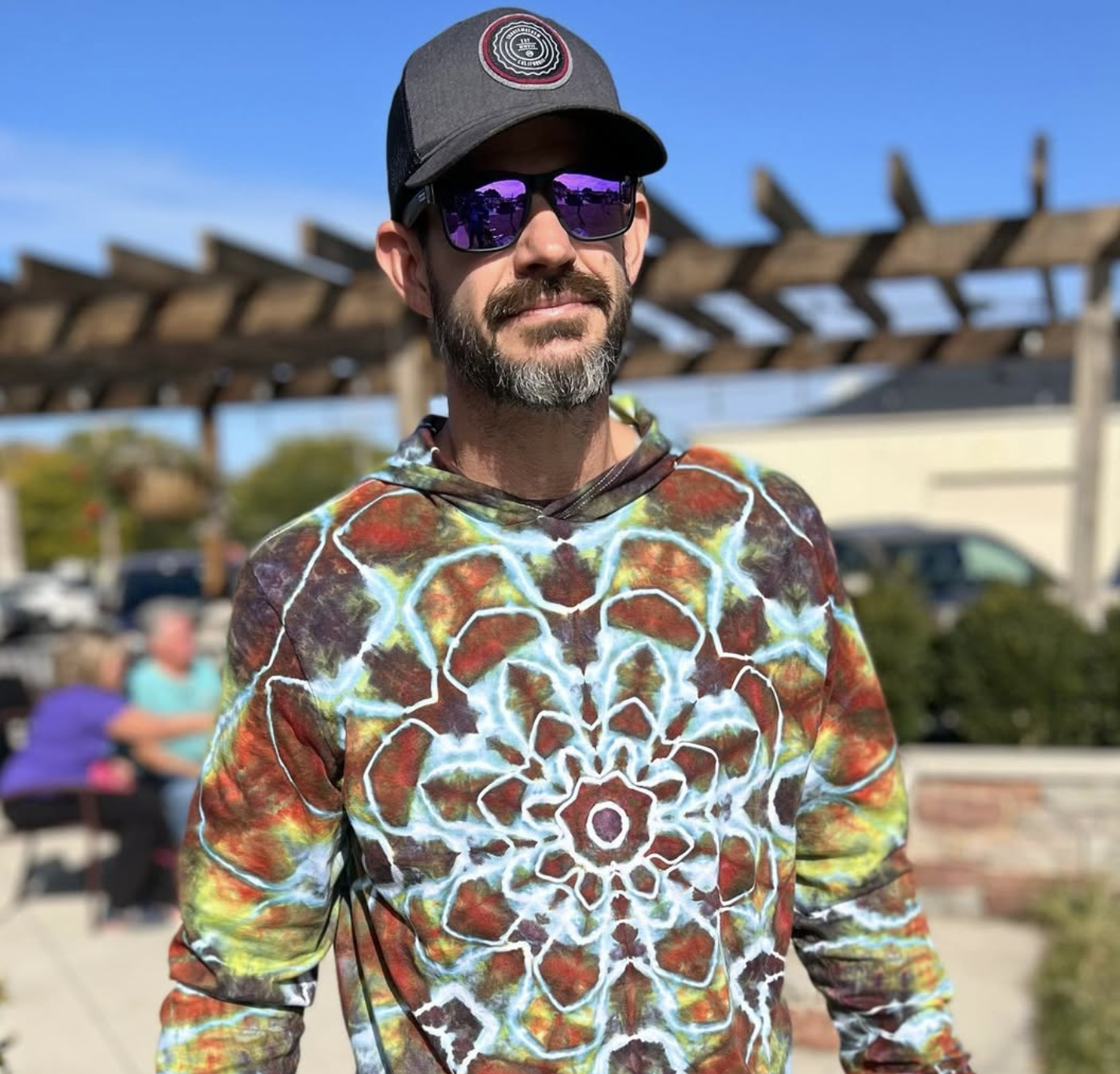
Because it all comes back to the energy. When the chemistry works and the skill is built, what comes out carries you in it. Nobody else could have made it. That's the feeling. And tie dye has an edge here that almost nothing else has. You don't hang it on a wall. You put it on your body and walk around in it.
The series is rolling out now, episode by episode, over on YouTube. Start at the beginning. The foundations build on each other, and that's the point.
Master the foundations. Make what you imagine.


Comments